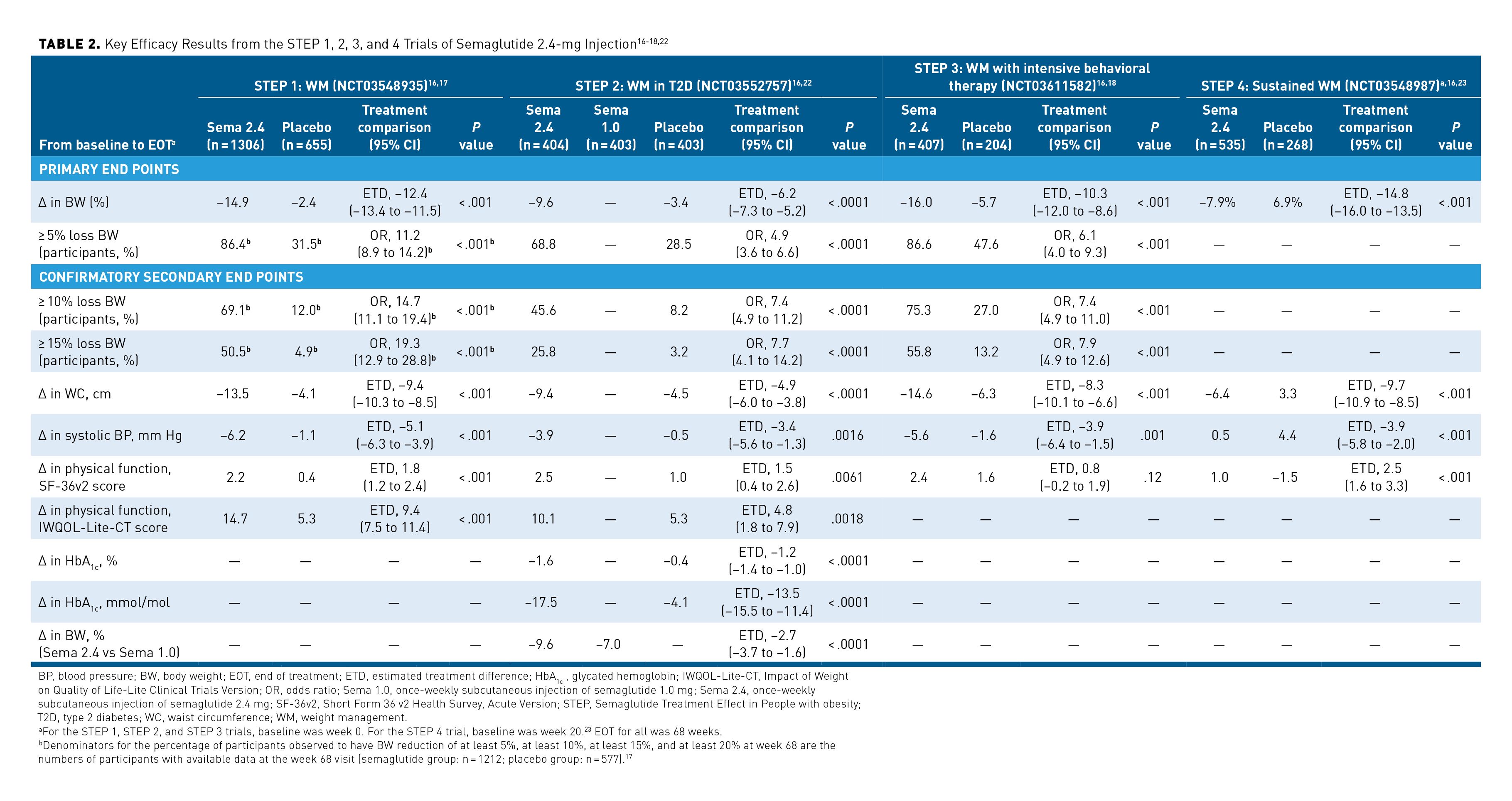
That figure exceeds the Phase 2 result of 24.2% at 48 weeks, which was already among the largest body-weight reductions reported in a randomized obesity trial
semaglutide versus placebo in participants with overweight or obesity alone or in addition to T2D, showing that greater weight loss with semaglutide versus placebo is achieved by females than by males [28]
Because of their glucose lowering effects, therapies that enhance incretin actions through inhibiting degradation of endogenous incretins or through activation of the GLP-1 receptor are now in use for the treatment of type 2 diabetes
The better compound depends entirely on individual priorities
More receptors means more weight loss: 28.7% for retatrutide vs 22.5% for tirzepatide in trials, but also more side effects
Since insulin therapy often indicates more advanced disease progression, greater severity, or additional comorbidities, which may lead to a higher risk of intestinal obstruction, and there was no statistically significant difference in intestinal obstruction risk between GLP-1RAs and other anti-diabetic medications (e.g., SGLT2 inhibitors, metformin, sulfonylureas, thiazolidinediones, DPP-4 inhibitors), the observed reduction relative to insulin does not necessarily suggest a protective effect of GLP-1RAs against intestinal obstruction